

STORY AT-A-GLANCE
Research published in the Proceedings of the National Academy of Sciences links the global expansion of industrial chicken farming to a more than 100-fold increase in Campylobacter strains moving between wild birds and farmed poultry
Chicken numbers have risen sevenfold since the 1960s to roughly 31 billion birds, and modeling suggests that flock size alone can allow wild-bird strains to become self-sustaining in chickens
Genes tied to antibiotic resistance, oxidative stress tolerance, metal acquisition, and movement appeared more often in bacteria from chickens than in bacteria from wild birds
A 2025 narrative review reports that poultry products account for about 70% of Campylobacter transmission, with roughly 1.5 million U.S. infections a year and about $11 billion in annual costs
Chickens carry heavy bacterial loads without appearing sick, and researchers point to differences in mucus, body temperature, and immune recognition as the likely reasons — though the mechanisms are not fully understood; in people, the same bacterium invades the intestinal lining

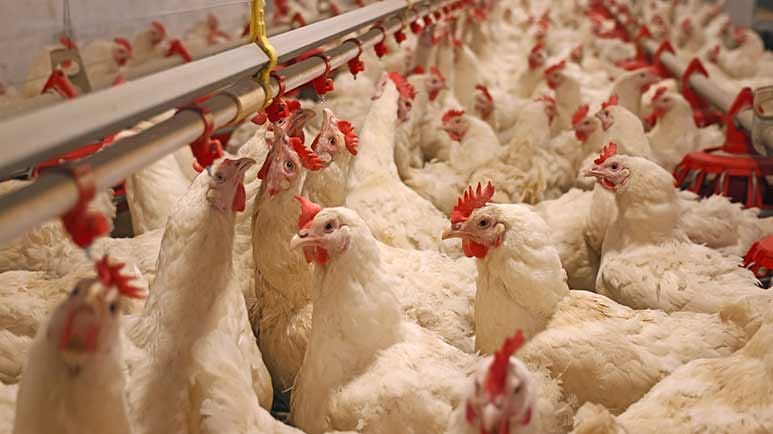
Conventionally raised chicken may be the protein Americans eat most often,1 and according to a recently published Oxford-led study, these birds now numbers roughly 31 billion worldwide and accounts for about 70% of all bird biomass on Earth.2 3 Because of the increasing demand, poultry are raised at very high densities in intensive systems — conditions the researchers link to the spread and mixing of foodborne pathogens.
In addition, rising antimicrobial resistance is making bacterial infections increasingly difficult to treat,4 with some antibiotics previously used against them no longer effective. The bacterium in question is Campylobacter,5 and if you have ever spent a few days being miserable after eating chicken for dinner, you may already have met it.
Separately, poultry has been implicated in urinary tract infections (UTIs) as well. A genomic attribution study across eight Southern California counties estimated that about 18% of E. coli UTIs were traceable to food-animal sources, and retail sampling in that study found E. coli contamination highest in poultry products.6
I have argued for years that factory farmed chicken deserves far more scrutiny than it gets, mainly because of the linoleic acid (LA) these birds accumulate from the grain they are fed. Now, the Oxford analysis adds another concern that consumers have to keep in mind when choosing these conventionally raised meats.
Genomic Analysis Links the Rise of Industrial Poultry to a 100-Fold Jump in Bacterial Host Switching
The featured study, published in the Proceedings of the National Academy of Sciences (PNAS) , was a genomic and modeling analysis rather than the clinical trial or laboratory experiment more typical of this field. Specifically, the researchers set out to test how the explosive growth of chicken farming has changed how Campylobacter jejuni moves between wild birds and farmed poultry, and whether life in that new environment has left marks on the bacterium’s genes.
For context, this species is one of the world’s most common causes of bacterial gastroenteritis — inflammation of the stomach and intestines.7
The dataset covered four and a half decades and 27 countries — The team analyzed 2,747 C. jejuni genomes, 1,892 collected from chickens and 855 from wild birds, representing 1,081 sequence types sampled across 27 countries between 1979 and 2024. Sequence types are genetic fingerprints used to tell bacterial lineages apart, and having more than a thousand of them gave the researchers enough resolution to trace which strains had jumped hosts and when.
According to the paper, chicken populations have risen sevenfold since the 1960s, and around 550 million people, including 220 million children under 5 years old, experience foodborne diarrhea each year, with Campylobacter the most common bacterial cause. It’s also estimated that 60% to 80% of human infections are attributable to isolates originating in poultry, though the authors caution that this figure is “something of an oversimplification.”
Host switching accelerated sharply after industrial-scale farming took hold — Reconstructing the bacterium’s family tree, the researchers estimated that the rate at which C. jejuni moves between chickens and wild birds has been more than 100 times higher since roughly 1900 than it was before chickens were domesticated. However, an intermediate step showed up much earlier.
Between about 3500 BC and 1900 CE, the transition rate ran roughly 15 times above pre-domestication levels, so domestication mattered, but intensification mattered more.
The authors tested how sensitive those figures were to uncertainty in the age of the phylogenetic tree and reported increases of 12.1- to 16.5-fold for the pre-intensification period and 86.9- to 119-fold for the intensification period. They also flagged that their tree probably underestimates the root date, and that the relatively small number of wild bird samples may also understate transition rates — both of which would make these fold changes conservative rather than inflated.
Chicken-adapted lineages grew faster than the chicken population itself — Across seven chicken-associated clonal complexes (CCs), which refer to groups of closely related lineages, the study estimated increases in effective population size — a measure of how much genetic diversity a bacterial population carries — of 50- to 200-fold for many of the chicken-associated lineages. The individual results varied widely and all of the estimates carry wide credible intervals.
For the lineages that expanded, that growth outpaced the sevenfold growth in chicken numbers over the same period, which the researchers interpret as evidence that these bacterial populations are not simply scaling up with host abundance, but experiencing ecological shifts that amplify genetic diversity, including more efficient transmission, reduced population bottlenecks, and greater opportunity for gene exchange. Sam Sheppard, a senior author of the paper, puts it more vividly:
“As the chicken population has exploded, they’ve increasingly picked up strains from different wild birds and become a cauldron of bacterial evolution. Lots of strains come together and hybridise. We do not want that, because that’s where new Frankenstein monster bugs emerge.”8
Modeling suggested that flock size alone can tip the balance — Using an epidemiological model of linked chicken and wild bird populations, the researchers found that once chicken numbers pass a threshold size, strains originating in wild birds can become self-sustaining in chickens, even when those strains are poorly suited to the new host. In their simulations, a strain at a tenfold transmission disadvantage still proliferated once the chicken population was large enough.
Raising the contact rate between wild birds and flocks had relatively little effect on that tipping point, while host population size did. The paper describes high-density chicken flocks as possible ecological “pathogen sponges” that absorb and amplify diverse strains while sustaining high prevalence and coinfection rates.
However, the authors are explicit that many of the model’s parameters are difficult to estimate reliably, and that the simulations are intended as an informative abstraction of reality rather than a prediction about any specific population.
Genome-wide analysis pointed to traits that help the bacterium persist — Comparing chicken and wild bird isolates, the study identified genes associated with chicken colonization, including tetO, which encodes a protein that confers tetracycline (a type of antibiotic) resistance, and cj1563c, a regulator that appears to be involved in metal handling, though the paper notes its specific function remains uncharacterized.
The authors suggest that tetO’s enrichment in chicken isolates is explained by widespread antimicrobial use in poultry production, in contrast to the low antibiotic exposure typical of wild birds. Separately, they report that tetO prevalence also tracks with sampling year, with isolates collected since 2015 showing much higher prevalence.
Other associated genes involved zinc acquisition, chemotaxis-linked motility, and oxidative stress tolerance, with more than half of the chicken-associated sites tied to handling oxidative stress. The researchers raise a specific concern here: Traits that increase oxygen tolerance may indirectly select for strains better able to survive along the food chain. They stress that these sites are strong candidates and that experimental work would be needed to confirm what each one contributes.
What Research Suggests About Why Chickens Carry Foodborne Microbes Without Getting Sick
So how can chickens harbor pathogenic bacteria without appearing visibly sick in the first place? A 2025 narrative review published in the journal Microorganisms addresses this question, as part of a broader survey of the major bacterial foodborne pathogens in poultry and the probiotic strategies being studied to control them.9
The review frames the intensification of poultry as the risk multiplier — Poultry production has grown from about 15.1 million metric tons in 1970 to roughly 103 million metric tons in 2024 to 2025, making it the fastest-growing meat sector worldwide.
The U.S. alone produced 9.33 billion broiler chickens in 2024 with a production value near $70.2 billion. With this in mind, the researchers state that the intensification of poultry farming has increased the risk of zoonotic transmission of bacterial pathogens.
The pathogens also carry great economic cost. Citing U.S. Department of Agriculture (USDA) Economic Research Service figures, the researchers report that 15 major pathogens account for 95% of reported foodborne illnesses at a total economic burden of $15.6 billion.
The review also cites an estimate that foodborne illness costs the U.S. about $75 billion annually, of which Campylobacter accounts for about $11 billion. An estimated 49 million foodborne illness cases occur in the U.S. each year, affecting roughly 15% of the population.
Poultry products account for most Campylobacter transmission — The review identifies C. jejuni as the most common bacterial cause of human gastroenteritis globally and reports that poultry products contribute to 70% of its transmission. Elsewhere, it puts the share of human infections from undercooked poultry meat at 50% to 80%, with contaminated food and water and direct animal contact making up the remainder.
Transmission through contaminated poultry products is estimated to cause 1.5 million foodborne infections annually in the U.S. Most cases resolve on their own, but the review reports a hospitalization rate of 10% and deaths in 0.2% of cases, and notes that infection in immunocompromised people has been associated with severe complications including reactive arthritis, inflammatory bowel disease, and Guillain-Barré syndrome.
Broiler flocks can be almost universally colonized while the birds appear healthy — Detection rates for Campylobacter may reach 100% in broiler flocks at slaughterhouses, with cecal colonization levels up to 1 billion colony-forming units (CFU) per gram of cecal contents, and yet these infections generally cause little or no clinical disease in chickens. For those unfamiliar, the cecum is a pouch in the bird’s intestinal tract where these bacteria concentrate.
The threshold for colonizing a bird is remarkably low. The review reports that as few as 35 colony-forming units in contaminated feed or water can successfully colonize a chicken’s gut, with colonization of the avian digestive tract occurring within 24 hours. For humans, ingesting a small dose of 500 to 900 colony-forming units in contaminated poultry products has been associated with severe diarrheal illness.
The difference between a healthy bird and a sick person comes down to mucus, temperature, and immune recognition — Laboratory work reviewed by the researchers found that chicken mucus reduces the binding and internalization of C. jejuni into human epithelial cells, while human mucus enhances both processes, with purified chicken large-intestine mucins (large proteins that give mucus its protective, slippery character) diminishing bacterial binding to human colonic cells by 60% to 70%.
Body temperature may also matter. The researchers describe a hypothesis that the divergent body temperature of chickens, 107.6 degrees Fahrenheit (42 degrees Celsius), compared with the human 98.6 degrees Fahrenheit (37 degrees Celsius), influences how the bacterium behaves, since human temperature facilitates expression of certain virulence factors.
The review qualifies this, noting that at least one adhesion gene is switched on at both chicken and human body temperatures, and that these gene-expression differences do not fully account for the contrast — the underlying mechanisms are not entirely understood.
Additionally, the structural mimicry between a component of the bacterial surface called lipooligosaccharide and human nerve gangliosides can ultimately trigger Guillain-Barré syndrome, which is a form of immune evasion the review says is not observed in chickens. In birds, the bacterium appears to stay largely in the mucus layer under immunological tolerance, and in people, it invades the intestinal lining.
5 Practical Steps to Protect Yourself from Foodborne Microbes
The featured studies show how the scale and density of modern poultry production shape the evolution and spread of these harmful bacteria. In my view, that also means your protein choices carry consequences beyond what the nutrition label tells you. The steps below can help you make safer shopping choices.
Treat raw poultry as a potential contamination source, not just a food — The bacteria in question live in the bird’s gut, and heat handles whatever is on the meat itself. The problem is the invisible transfer that happens first, such as a drip on the counter, a knife that goes from the chicken to the salad, and hands that touch the faucet before the soap.
To lower the risk of cross contamination, use a separate cutting board for raw poultry (or any meat for that matter), and wash your hands and anything the package touched with hot soapy water. Skip rinsing the bird in the sink, since rinsing mainly spreads droplets around your kitchen. Cook the meat thoroughly and keep the vegetable ingredients away while you work.
Prioritize ruminant meat, eggs, and low-fat seafood as your primary protein — In the Southern California retail-meat sampling described earlier, E. coli contamination was lowest in beef (47%) and highest in poultry — 82% for turkey and 58% for chicken — and ruminant meats such as beef, lamb, and bison carry a more favorable fat profile.10
Conventionally raised chicken accumulates high levels of linoleic acid from the grain it eats, and that fat accumulates in your tissues as well, where it may compromise cellular energy production over time.
Pastured eggs are another excellent protein source, and warm-water, low-fat finfish rounds out the rotation. Chicken becomes an occasional food rather than the thing you default to when cooking your dinner. If you’re still considering eating chicken, I recommend the pasture-raised variety.
Get your protein target right rather than eating more of everything — Aim for roughly 15% of your daily calories from protein, or about 0.6 to 0.8 grams per pound of your ideal body weight, with roughly a third of that coming from collagen sources such as bone broth, slow-cooked cuts, or high-quality collagen powder.
Most people who worry about protein are worried about muscle health and hitting a sensible target with better-quality sources trumps piling on more of whatever is cheapest at the store.
Build gut resilience with foods your stomach can handle — A robust gut lining is part of your defense against anything that arrives with your food, and many people are working with a compromised microbiome. Start with whole fruits and white rice rather than loading up on high-fiber foods, which can raise endotoxin levels when the gut is already struggling.
Gas, cramping, diarrhea, or constipation are signals to slow the progression down rather than push through it. Then, move toward more complex carbohydrates and starches as digestion improves.
Support healthy vitamin D levels, preferably through sensible sun exposure — Vitamin D functions as a powerful epigenetic regulator and supports immune function throughout the body, and sunlight around solar noon is the most effective way to get it. If you have been eating a diet high in seed oils, ease into stronger sun gradually, since high linoleic acid levels increase susceptibility to sunburn.
A blood test for 25(OH)D tells you where you actually stand, with 60 to 80 ng/mL being the range to aim for, and pairing vitamin D with magnesium and vitamin K2 helps your body use it properly. Talk to your health care provider about whether this testing is appropriate for you.
Frequently Asked Questions (FAQs) About Farmed Poultry and Food Poisoning
Q: What is Campylobacter, and how do most people get it?
A: Campylobacter is the most common bacterial cause of gastroenteritis worldwide, and it lives in the guts of birds, including farmed chickens. A 2025 narrative review published in Microorganisms reports that poultry products account for about 70% of its transmission and puts the share of human infections from undercooked poultry meat at 50% to 80%, with contaminated food and water and direct animal contact making up the rest. Most exposure traces back to raw meat and the surfaces it touches.
Q: Does cooking chicken thoroughly take care of the risk?
A: Heat handles the bacteria on the meat itself. The gap is everything that happens before the pan, such as a drip on the counter, a knife that moves from the chicken to the salad, hands that touch the faucet before the soap. Giving raw poultry its own cutting board, washing hands and surfaces with hot soapy water, and skipping the sink rinse can address the part that cooking cannot.
Q: Why don’t chickens get sick if they carry so much of this bacterium?
A: Detection rates can reach 100% in broiler flocks at slaughterhouses, with very high bacterial loads in the birds’ intestinal tracts, and yet these infections generally cause little or no clinical disease in chickens. The 2025 Microorganisms review points to differences in mucus composition, body temperature, and immune recognition.
The review also notes that these mechanisms are not entirely understood. In birds, the bacterium largely stays in the mucus layer under immunological tolerance, while in people it invades the intestinal lining.
Q: How serious is a Campylobacter infection?
A: Most cases resolve on their own. The review reports a hospitalization rate of 10% and deaths in 0.2% of cases, and notes that infection in immunocompromised people has been associated with severe complications including reactive arthritis, inflammatory bowel disease, and Guillain-Barré syndrome. Researchers also point to rising antibiotic resistance, since some drugs once used against these infections are no longer effective.11
Q: What does chicken farming have to do with antibiotic resistance?
A: The PNAS analysis found that tetO, a gene conferring tetracycline resistance, appeared more often in Campylobacter from chickens than from wild birds, with much higher prevalence in isolates collected since 2015. The researchers relate this to widespread antimicrobial use in poultry production, in contrast to the minimal antibiotic exposure of wild birds. The study identified an association through genome comparisons rather than testing any single farming practice directly.
This article is for informational purposes only and does not constitute medical advice. Consult a qualified health care provider before making changes to your health regimen.
Disclaimer: The entire contents of this website are based upon the opinions of Dr. Mercola, unless otherwise noted. Individual articles are based upon the opinions of the respective author, who retains copyright as marked.
The information on this website is not intended to replace a one-on-one relationship with a qualified health care professional and is not intended as medical advice. It is intended as a sharing of knowledge and information from the research and experience of Dr. Mercola and his community. Dr. Mercola encourages you to make your own health care decisions based upon your research and in partnership with a qualified health care professional. The subscription fee being requested is for access to the articles and information posted on this site, and is not being paid for any individual medical advice.
If you are pregnant, nursing, taking medication, or have a medical condition, consult your health care professional before using products based on this content.