

STORY AT-A-GLANCE
Bacon-based condiments like jams, powders, and spreads can turn processed meat into a daily habit, and the concern comes from repeated, long-term intake rather than any single serving
Processed meat has been classified by the International Agency for Research on Cancer (IARC) as carcinogenic to humans, with the strongest evidence linking it to colorectal cancer
Sugar-heavy barbecue sauce earns a second warning, since a daily pattern of high-sugar, ultraprocessed eating is tied to weight gain, insulin resistance, and inflammation linked to several cancers
Chemistry between plants and meat explains the differences. Antioxidants in vegetables help block the formation of cancer-linked compounds, while heme iron in processed meat appears to encourage it
Producers like Denmark’s Hanegal show cured meat without added nitrites is possible, and you can swap bacon toppings for fresh herbs, garlic, roasted mushrooms, and homemade sauces

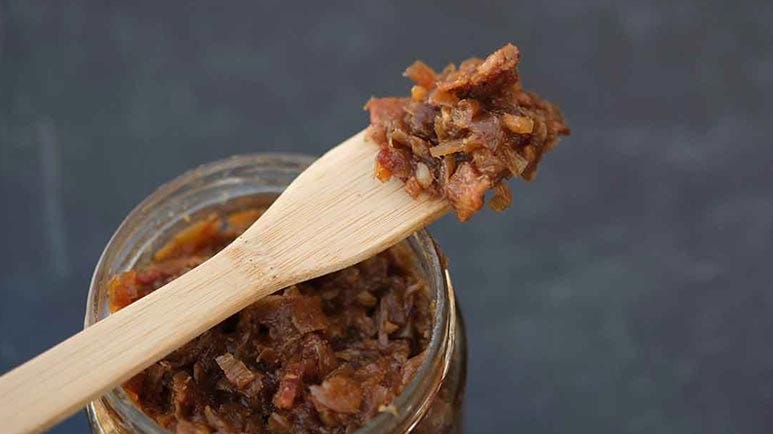
Bacon has been a breakfast staple in America since the 1920s,1 but the frenzy doesn’t end there. Now, it’s used as an ingredient for a wide range of bacon-centric condiments, such as jams, powders, and spreads.2 These may feel like small, harmless garnishes on your food, every now and then, but that’s where many get it wrong.
This quiet habit of adding processed meat condiments to your plate day after day can eventually affect your health mainly because of the way they’re made. In fact, researchers have been raising awareness about the link between cancer and processed meats.3
Oncologists Point to Processed-Meat Toppings as the Condiment Consumers Need to Rethink
In a report published by Parade and syndicated via AOL, two oncologists — Dr. Mark Ashamalla and Dr. Avishek Kumar — give their thoughts on how everyday eating patterns may influence cancer risk. Their central message is that no single bite determines your health, but the habits you repeat for years can eventually affect your well-being, especially when you habitually use processed meat condiments:4
Diet is one of the risk factors you can influence — Both Ashamalla and Kumar frame diet as a modifiable factor, meaning it’s something within your control, unlike age and genetics. According to a 2004 research review cited in the report, maintaining a healthy diet and lifestyle is associated with lowering cancer risk by roughly 30% to 40%.5
Ashamalla is careful to clarify that cancer is not caused by any one food or condiment. Risk builds over time and is shaped by many factors at once, including genetics, age, tobacco use, alcohol use, body weight, physical activity, and environmental exposures. That said, Kumar explains that prevention is rarely about one perfect meal and far more about the patterns you keep for years.
Processed-meat toppings are the specific condiment flagged — The condiment Kumar says people need to avoid is processed-meat toppings, such as bacon bits, bacon jam, and bacon-based spreads. Again, he reasons that the danger isn’t a single serving but repeated, long-term intake of processed meat.\
To emphasize the risk to consumers, he notes that processed meat has been classified by the International Agency for Research on Cancer (IARC) as carcinogenic to humans, with the strongest evidence linking it to colorectal cancer.
Nitrites and nitrates are the compounds of concern — The report explains that processed meats, such as bacon, are preserved by smoking, curing, salting, or adding preservatives, and when eaten regularly, they can raise cancer risk because they contain nitrites and nitrates. These are preservative compounds that, according to Dr. Kumar, may form other compounds in the body capable of damaging cells.
Sugar-heavy barbecue sauce earns a second warning — Beyond bacon-based toppings, Kumar called out sugar-heavy barbecue sauce as another condiment worth minimizing. He observes that many barbecue sauces are essentially sweetened syrup with a smoky flavor, often listing added sugar, corn syrup, or high-fructose corn syrup (HFCS) near the top of the ingredient list.
Again, one spoonful is not the problem. The concern is when sugary condiments become part of a daily pattern of high-sugar, ultraprocessed eating.
Kumar explains that too much added sugar over time can contribute to weight gain, obesity, insulin resistance, and chronic inflammation, and that obesity and inflammation are in turn linked to a higher risk of several cancers, including breast, colon, endometrial, pancreatic, liver, and kidney cancers. Barbecue sauce also tends to appear alongside processed or heavily charred meats.
The takeaway is about patterns, not perfection — Ashamalla’s tip is focusing not on perfection, but on patterns. He describes that your goal needs to be small, repeatable changes, specifically less processed meat, less added sugar, less alcohol, and more toward plant foods, like vegetables and fruits. “Over time, these small substitutions can support a healthier weight, better gut health and a more cancer-preventive eating pattern,” he says.
Why the Source of Nitrates and Nitrites Changes the Cancer Picture
To understand why medical practitioners singled out bacon-based toppings, it helps to look at a 2020 review published in the journal Antioxidants. Here, researchers set out to map where dietary nitrates and nitrites come from, how your body processes them, and how they relate to cancer risk and to something they call nitrosative stress.6
In essence, nitrosative stress is damage to cells caused by an excess of reactive nitrogen compounds, and it can affect fats, cell membranes, proteins, and DNA. The key takeaway here is that a simple “avoid nitrates” message misses the point entirely, as the same compound can behave very differently depending on the food it arrives in.
Most of your nitrate intake comes from vegetables, not meat — While Kumar and Ashamalla’s report focused on nitrates found in processed meat, it’s also found in plant sources. Interestingly, the nitrates here may support your health.
In the Antioxidants study, vegetables and fruit supply roughly 50% to 75% of your total dietary nitrate intake, and it cites survey data suggesting that around 80% to 85% of human nitrate exposure comes from vegetables. Leafy vegetables such as rucola, lettuce, and spinach carry the highest nitrate levels of all.
Processed meats are a separate and much smaller source, because the meat industry adds nitrates and nitrites during curing, the preservation process that gives cured meat its color, flavor, and shelf life. On the surface, this makes the vegetable numbers look alarming, but the review’s point is that raw quantity is not the whole story.
The chemical reaction is where the risk appears — Nitrates and nitrites are not themselves carcinogenic, according to the researchers. The concern is what they can turn into. Inside the digestive tract, nitrites can react with compounds called secondary amines to form N-nitroso compounds, or nitrosamines, many of which are considered carcinogenic. This conversion is not guaranteed, as it depends on certain conditions.
The acidic environment of the stomach and the presence of iron both push this reaction forward, while antioxidants like vitamin C and vitamin E hold it back. In fact, the authors cite research showing that nitrosamine formation was completely inhibited when antioxidants outnumbered nitrite by a ratio above 2 to 1. It’s estimated that this internal, or endogenous, nitrosation produces 45% to 75% of a person’s total exposure to N-nitroso compounds.
Vegetable nitrates appear far less concerning, and processed meat carries an accelerant — This is the pivot on which the whole premise of the featured study rests. Because vegetables are naturally rich in antioxidants and vitamins, the nitrates they deliver come packaged with the very compounds that suppress nitrosamine formation.
The review cited a large meta-analysis of gastric, or stomach, cancer studies in which dietary nitrate intake was associated with a reduction in risk, an effect the authors attributed to those accompanying protective compounds rather than to nitrate itself.
Meanwhile, animal sources tell the opposite story. Processed meat is rich in amines, amides, and heme iron (the iron found in red meat) and this substance is described as a stimulant of endogenous N-nitroso compound formation. The researchers cited findings that nitrates and nitrites from animal sources, including processed meat, were positively associated with renal cell carcinoma, a kidney cancer, whereas overall intake that included plant sources showed no such association.
The evidence links processed-meat compounds to several cancers, including colorectal cancer — Across the human studies that the analysis looked into, dietary nitrate and nitrite intake has been linked to a higher relative risk of breast, gastric, colorectal, esophageal, thyroid, and other cancers, though the authors are quick to point out that results across the reviewed studies are inconsistent.
The association tends to be weak for dietary nitrate but more noticeable for nitrites. But notably, the researchers pointed out that in 2015, the International Agency for Research on Cancer declared processed meat that had been cured to be a Group 1 carcinogen, its highest classification, based on data related to colorectal and stomach cancer.
Curing serves real purposes, which is why the problem persists — The review is even-handed about why nitrites are used at all. They develop the characteristic color and flavor of cured meat that consumers are familiar with, act against bacteria, notably Clostridium botulinum, which is the bacterial strain behind botulism. Because no single substitute reproduces all these functions, the authors conclude that nitrates and nitrites should be limited in the meat industry.
The authors note that because of nitrite’s multifunctional role, finding a perfect substitute in meat processing remains very difficult.
With the dangers of processed meat now influencing the public’s buying decisions, other companies are trying to find safer workarounds. One example is Hanegal, a meat producer in Denmark, which has been offering nitrite-free cured meats for more than two decades. Denmark permits far lower nitrite levels than the rest of the European Union (EU) yet records fewer botulism cases than other member states.7,8,9
That said, Danish nitrite-free meats have a brownish appearance, compared to the pink hue that consumers typically associate with curing. For a more in-depth exploration of this topic, read “The Processed Meat Industry Uses Dirty Tactics to Further Its Goals.”
How to Flavor Your Food Without the Processed-Meat Habit
If you regularly eat processed meats, know that a fix is entirely within reach, and it doesn’t demand perfection. The goal is to change the daily and weekly patterns, especially the small, automatic choices like what you sprinkle, spread, and pour onto your food. Here are five practical ways to keep the flavor while dropping the toppings that carry the most concern.
Trade processed-meat toppings for whole-food flavor — Instead of bacon bits, bacon jam, or bacon-based spreads, build savory, smoky depth with roasted mushrooms, caramelized onions, fresh garlic, smoked paprika, herbs, or a homemade salsa or chimichurri.1010 These give you the richness you’re after without the cured-meat preservatives, and they turn a passive habit into an active choice you control.
Make your own sauces instead of reaching for a ready-made product — Many store-bought barbecue sauces, dressings, and condiments are built on added sugar or high-fructose corn syrup (HFCS), often listed near the top of the label. Whisking together simple, organic ingredients at home lets you skip the sweetened syrups and mystery additives.
In addition, make it a habit to cook at home rather than eating out — hidden seed oils and processed ingredients are hard to avoid in most restaurants and fast food joints.
Upgrade the protein and fat you cook with — Center your plate on whole, minimally processed foods like ruminant meats and pastured eggs. Also, reach for stable cooking fats such as tallow, ghee, or grass fed butter rather than industrial seed oils high in linoleic acid (LA). Keeping LA intake low can support better metabolic and cellular health over time.
Cut back on refined sugar to protect your metabolic health — Sugary condiments and ultraprocessed foods can nudge you toward weight gain, insulin resistance, and chronic inflammation, and these conditions are linked to a higher risk of several cancers.
Optimize your vitamin D, ideally through sensible sun exposure — Sunlight supports cellular energy production and a range of processes tied to overall health, and midday sun is the most efficient way to build your levels naturally. I recommend that you aim for 60 to 80 nanograms per milliliter (ng/mL) of vitamin D in your blood, and the only way to know you’re reaching that goal is to get screened regularly. Talk to your health care provider about whether vitamin D testing is appropriate for you.
Frequently Asked Questions About Processed Meat Toppings
Q: Which condiment did Dr. Kumar and Dr. Ashamalla say to avoid?
A: The condiment that was flagged is processed-meat-based toppings, specifically bacon bits, bacon jam, and bacon-based spreads. According to these two oncologists, the problem is not one serving but repeated, long-term intake of processed meat. They noted that sugar-heavy barbecue sauce is another condiment worth minimizing.
Q: Are the nitrates in vegetables as risky as those in processed meat?
A: The evidence suggests they behave very differently. According to the review in Antioxidants, vegetables are naturally rich in antioxidants like vitamin C and vitamin E, which help block the formation of the cancer-linked compounds nitrites can produce. Processed meat, by contrast, contains heme iron, which is described as a stimulant of that same compound formation, so the source of the nitrate or nitrite matters a great deal.
Q: Why is processed meat classified as carcinogenic?
A: In 2015 the IARC classified processed meat as carcinogenic to humans, its highest category, based on data related to colorectal and stomach cancer. Nitrates and nitrites are not themselves carcinogenic, but they can react with other compounds in the body to form N-nitroso compounds, many of which are considered carcinogenic.
Q: What is nitrosative stress?
A: As described in the review published in Antioxidants, nitrosative stress is damage to cells caused by an excess of reactive nitrogen compounds. This kind of damage can affect fats, cell membranes, proteins, and DNA. It’s one of the reasons researchers look closely at how the body handles nitrites and nitrates from different food sources.
Q: What can I use instead of bacon toppings or sugary barbecue sauce?
A: For a smoky or savory flavor, options like smoked paprika, roasted mushrooms, caramelized onions, garlic, and herbs can be considered. Other whole-food choices include mustard, fresh salsa, and chimichurri, along with homemade sauces built using simple ingredients. These let you keep the flavor while dropping the cured-meat preservatives and added sugars.
This article is for informational purposes only and does not constitute medical advice. Consult a qualified health care provider before making changes to your health regimen.
Processed meat warrants attention not only due to its well-established link to colorectal cancer but also because of the potential association observed with primary lung cancer and the spread of colorectal cancer to the lungs (pulmonary metastasis).
It is important to distinguish between two different scenarios:
1. Primary lung cancer: Some epidemiological studies have found an association between higher processed meat consumption and the risk of developing lung cancer. A meta-analysis confirms this.
https://pubmed.ncbi.nlm.nih.gov/34455534/?utm.com
2. Colorectal cancer metastasis to the lung: This is entirely different. Colorectal cancer can spread from the original tumor to other organs, particularly the liver and lungs. In this case, we are not referring to "lung cancer," but rather to pulmonary metastases originating from colorectal cancer.
https://pubmed.ncbi.nlm.nih.gov/40210826/ (2025)
Thus, there are two distinct pathways: when discussing the potential effects of processed meat, one must clearly differentiate between the risk of developing primary lung cancer and the possibility of colorectal cancer subsequently spreading to the lungs.
The evidence regarding processed meat and colorectal cancer is much more consistent:
https://pubmed.ncbi.nlm.nih.gov/40210826/?utm.com (2025)
Potential mechanisms involve N-nitroso compounds, heme iron, heterocyclic amines, and polycyclic aromatic hydrocarbons, depending on processing and cooking methods.
Minimizing processed meat intake can be a reasonable measure within a comprehensive cancer prevention strategy. Furthermore, regarding primary lung cancer, we must not forget that avoiding tobacco remains the single most important preventive measure.