
Why Chronic Constipation Deserves More Serious Attention
Doctors call it 'idiopathic,' but mounting evidence shows everyday triggers - and drug-driven fixes - may be quietly fueling a nationwide crisis.

STORY AT-A-GLANCE
It's everywhere, but no one talks about it: Constipation is widespread, yet medicine is often at a loss over what to do, to the point 14% of American adults have constipation with no known cause. Because of this, treatments vary widely, and 62% of constipated patients are too embarrassed to discuss the topic with their doctors
The medical system often makes it worse: Nearly half of patients end up getting colonoscopies they don't need, and many become hooked on laxatives that damage their gut function over time — creating a vicious cycle where you need more and more just to go
It's not just uncomfortable — it's actually dangerous: Chronic constipation disrupts your gut bacteria, leaves you exhausted, and significantly raises your risk for numerous severe diseases and sends nearly 100,000 Americans to the hospital every year
We're missing the obvious culprits: Things like dairy (especially in kids), gluten sensitivity, low thyroid, anxiety, and even common medications are major triggers — but doctors rarely investigate these connections, instead just labeling most cases as "cause unknown"
Our modern lifestyle is working against us: Sitting all day freezes natural gut movement, we ignore our body's signals to go, and, most importantly, sitting on toilets instead of squatting makes it much harder to have regular bowel movements. Instead of just pushing more fiber and laxatives, we need to address the real causes of constipation. This article will cover the key ones that are frequently overlooked

Since starting the Forgotten Side of Medicine, I’ve received quite a few correspondences from readers asking me to write about constipation. This I believe, is reflective of how widespread but rarely discussed constipation is, especially as one becomes older1 (where it often becomes a primary concern of everyday life).
Likewise, the primary diagnosis for constipation is “chronic idiopathic constipation” (CIC). Idiopathic, for reference, means “no one knows why” which is remarkable given that existing studies find2 between 9% to 20% of adults (averaging at 14%) have CIC. This figure in turn, varies greatly by country:
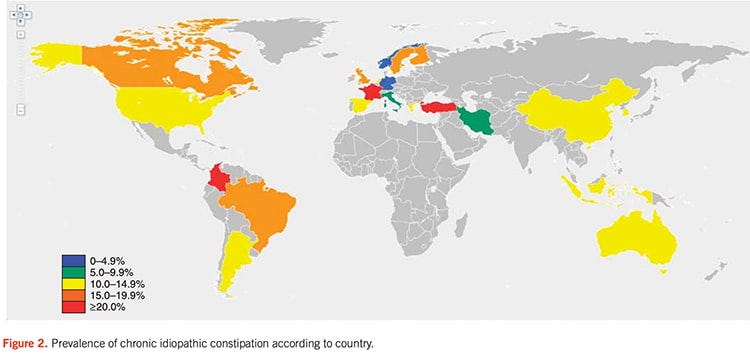
In tandem, there is no clear consensus on how to treat CIC (e.g., if you review the treatment guidelines,3 you will see they vary greatly depending on which country they were made in). Likewise, the majority of patients do not even discuss their condition with their doctors:
“Overall, 4,702 participants had experienced constipation (24.0% met the Rome IV CIC criteria).4 Among all respondents with previous constipation, 37.6% discussed their symptoms with a clinician (primary care provider 87.6%, gastroenterologist 26.0%, and urgent care/emergency room physician 7.7%).
We found that the locus of control — the extent to which individuals believe they can control events that affect them — is associated with healthcare seeking for constipation. Namely, those with a lower locus of control (i.e., who believe symptoms are driven by others, chance, or fate) are more likely to consult with providers regarding their symptoms.
However, individuals experiencing this maladaptive cognition may be resistant to both undergoing indicated diagnostic testing and accepting and adhering to treatments, thereby undercutting treatment success and reducing patient satisfaction.”
Additionally, many who seek out medical help end up getting colonoscopy, a procedure which carries real risks and has no benefit here:
“Among those who sought care, 54% reported previous diagnostic testing.5 Colonoscopy was the most commonly performed test; 46% of health seekers specifically underwent the procedure to evaluate their constipation.
Although we did not ask the respondents about alarm features or have access to their medical records to confirm the ‘true’ indication for the procedure, this suggests potential overuse of endoscopy in the evaluation of constipation. This is an issue because the diagnostic yield of colonoscopy for constipation is limited.
Pepin and Ladabaum noted that in 234 individuals undergoing lower endoscopy solely for constipation, no cancers were found, and only 3% had advanced lesions. The American Society for Gastrointestinal Endoscopy states that colonoscopy should not be performed in the initial evaluation of constipated patients without alarm features or suspicion of organic disease.
The high usage of endoscopy and other tests seen in our study, in combination with the high prevalence of constipation, further reinforces the significant impact of constipation on population health and healthcare costs and emphasizes that efforts to reduce unnecessary testing are needed.”
In short, there is a surprising gap of knowledge in this area, which I believe is best demonstrated by how many times I’ve been asked to admit a patient to a hospital who was essentially just severely constipated.
Note: The current research shows constipation hospitalizes 92,000 Americans each year6 and results in 1.3 million visits to American emergency rooms,7 which again illustrates our society’s lack of knowledge in this area, especially as the rate of this is increasing (e.g., from 2006 to 2011, there was a 42 percent rise in ER visits for constipation).8
The Effects of Constipation
While it is relatively unlikely one will be hospitalized for constipation, the condition nonetheless has a significant effect on quality of life, as it is stressful to be unable to defecate when you attempt to and often quite uncomfortable once too much has built up inside you. Conversely, after a large bowel movement (especially if they've been constipated), individuals often feel much better and clear-headed.
Constipation frequently results in significant issues. Most commonly, we recognize its connection to the fact that the pressure created by strained bowel movements can lead to hemorrhoids, rectal prolapse, and anal fissures. However, it can also lead to less appreciated issues including:
Dysbiosis within the gut microbiome. In many cases, the gut dysbiosis that leads to constipation results from foods not being fully digested. One of the most interesting things I learned is that SIBO often results from slowed bowel transit time, and practitioners who are most successful in treating SIBO focus on increasing peristalsis to facilitate the body eliminating the problematic bacteria.9
Fatigue, headaches, abdominal pain, nausea, and vomiting.10
Chronic constipation is linked to progressively more severe illnesses, including diverticulitis, kidney disease, gastric and colorectal cancer, ischemic colitis, and Parkinson's disease.11
The Dangers of Laxatives
Since most constipation is labeled as "idiopathic" treatments are typically symptom based. Unfortunately, while laxatives are relatively benign if used occasionally, over time, they can impair the normal function of the GI tract and create a situation where one requires chronic laxative use.
Note: Clinicians have also reported instances where laxatives destroyed the normal functioning of the colon which then required part of the colon to be surgically removed.12
One of the most commonly used laxatives (MiraLAX) can create issues because a surprising number of people have sensitivities or allergies to polyethylene glycol. When individuals have delayed bowel transit time (anyone who is constipated), they are more likely to systemically absorb MiraLAX and experience toxicity from it.
As such, it is critical to identify the actual cause of constipation rather than just trying to perpetually treat the symptoms.
Conventional Causes of Constipation
When evaluating the root cause of constipation, it is critical never to forget that constipation can also be a symptom of a more serious illness.
For example, when a tumor grows in the colon, it progressively blocks transit through the colon, which in turn leads to the feces becoming narrower and narrower (along with abnormal weight loss, anemia, and rectal bleeding). Because of this, if you notice that it is gradually happening, it is worth getting a preliminary test to see if you may have cancer (there are simple and complex ways to test the stools for colon cancer).13
Note: Red meat (especially for those who do not eat it frequently) and beet juice can also make the stools turn red.
Other diseases that can frequently cause constipation include:
Hypothyroidism — One of the common symptoms of hypothyroidism (beyond hair loss, coldness, fatigue, and weight gain) is delayed bowel transit time. As such, if you are constipated, you need to consider if you are hypothyroid.
Hyperparathyroidism — This is a surprisingly common but unrecognized condition which can make individuals feel quite ill (e.g., it can cause pain throughout the body, cognitive issues, arrhythmias, kidney stones, unexpected fractures and gastrointestinal issues).
Anxiety or depression — Many report stress and anxiety causes constipation, and extensive data supports this.14 For example, a large study15 found anxiety was significantly more common in constipated patients, another found 65% of constipated patients had psychiatric conditions — most frequently anxiety or depression.16
Proposed mechanisms include brain-gut axis dysfunction, increased pelvic floor muscle tension due to anxiety, altered gut microbiota in anxiety, and hormonal pathways affected by stress — and my leading hypothesis — sympathetic activation directly reducing bowel transit.17 Because of this, mind-body practices that relax the body can sometimes be quite helpful, as is psychological support.
Note: The natural treatments for anxiety are discussed here and those for depression here.
Additionally, many medications, particularly opioids, can cause constipation, with potential offenders also including antacids, anticholinergics, antidepressants, antihistamines, antipsychotics, calcium channel blockers, certain blood pressure medications, and NSAIDs. Because of this, if you develop constipation after starting a new prescription, it is always important to see if that drug is linked to impaired bowel movements.
Note: Iron and calcium supplements can sometimes cause constipation (e.g., iron supplements cause constipation for approximately 10% of users18).
Other Causes of Constipation
Unfortunately, in most cases, the cause of constipation remains unknown, and typically the advice given is to "eat more fiber," which while sometimes helpful often is not. Additionally, in some cases, the benefits of fiber are not due to their stool bulking activity but rather that they directly stimulate peristalsis.
Presently, I believe there are a few major contributors to the epidemic of constipation we face that are largely overlooked.
Dietary causes:
Dairy consumption (particularly in children) — which has been shown in many studies (e.g., a randomized trial found that 71.4% of children with chronic constipation not responding to laxatives significantly improved within 4 weeks of stopping dairy, whereas only 11.4% of the control group,19 with similar results seen in this blinded crossover trial).20
Note: While this is often attributed to food allergies, it may also be due to the opioid-like substances in dairy (e.g., beta-casomorphin), as individuals often improve on milk lacking these substances, and severe constipation has been found to be reversed by naloxone (an opioid blocker).21
Likewise, gluten contains opioid-like peptides (gluten exorphins)22 which have been shown to slow bowel transit time23 and cause constipation.24 Lastly, the variable sensitivity to these compounds (and being predisposed to constipation)25 may be a result of genetic susceptibility (e.g., OPRM1 A118G polymorphisms have been repeatedly shown to influence sensitivity to opioids).26
Poor diet and food triggers of constipation. Beyond dairy, we find the constipation-causing agents often vary person to person, with the most commonly reported (ordered by frequency) being cow dairy, gluten, goat's milk, beef (red meat), legumes, eggs, fried foods, rice (white), bananas (unripe), chocolate, caffeine (excess), alcohol (excess), tea (excess).
Additionally, refined grains frequently lack the fiber needed to facilitate healthy bowel movements, and many readers have found using freshly milled whole grain flour (e.g., wheat, within 24 hours of milling) cured their constipation.
Note: Within Chinese medicine, there is an entire diagnostic model based on looking at the characteristics of one's stools.27 I have often found it to be extremely useful, and I often monitor my own stools to assess how my body is handling my current diet.
Nutrition and hydration — In addition to certain foods causing constipation, a lack of critical substances can as well.
For example, chronic dehydration is widely recognized to be a cause of constipation (due to it drying out the stools and making them harder to push through). Additionally, I strongly suspect dehydration causes peristalsis (bowel motion) to shut down, as I've seen numerous cases where "frozen bowels" rapidly softened and resumed their normal function once the individuals received either a saline infusion or a zeta potential restoring treatment.
Likewise, ultraviolet blood irradiation has been repeatedly observed to rapidly restore bowel function. Likewise, mineral deficiencies (primarily magnesium) and in some cases potassium can sometimes cause constipation.28
Gastrointestinal dysfunction — As we rely on the gastrointestinal tract to push food along (through a process known as peristalsis), constipation can also signal that gastrointestinal dysfunction is occurring. Some of the most common causes include:
Low stomach acid creates a variety of other digestive issues such as pathogenic bowel colonization, acid reflux, food allergies, and severe nutritional deficiencies. Stomach acid restoration protocols, in addition to treating acid reflux can also be extremely helpful for constipation.
Note: Symptomatic low stomach acid is extremely common (e.g., Senator Ron Johnson recently shared that learning about this allowed him to treat his chronic acid reflux).
A disrupted gut microbiome (which conversely often becomes disrupted by bowel stasis).
Hormonal shifts (e.g., some women develop constipation during pregnancy, menopause, or with hormone replacement therapy). Because of this, it is vital to be aware of this issue, and if applicable, work with a hormone specialist who can address it.
Dysfunction within the autonomic nervous system (which amongst other things is a common consequence of many of the constipation triggering drugs and psychiatric states I discussed above).
Habits and exercise — Our modern lifestyle (e.g., with its constant stress) predisposes many of us to be constipated. Fortunately, once we recognize what's happening, we can easily address much of it. We find the following are the most problematic:
Individuals not allowing themselves the time to go to the bathroom when they need to defecate, as once they miss this window, they often subsequently cannot.
Note: Within Chinese medicine, it is believed that different organs activate at certain times in the day.29 In that system, the colon activates between 5 to 7 AM, and I've had numerous patients who have found if they do not use that time to have a bowel movement, it's often quite difficult for the rest of the day.
Peristalsis depends upon movement within the rest of the body. For this reason, sedentary lifestyles greatly reduce the inherent motion within the gastrointestinal tract and treating constipation often requires addressing a lack of physical activity.
The position we go to the toilet on.
Squatting
Something many people don't realize is that the modern toilet is a relatively new invention, and that prior to it, rather than sitting, humans squatted to go to the bathroom.30 Additionally, sitting toilets are primarily a Western creation, so as one goes to many other societies, squatting toilets are much more common (although they are gradually being phased out as a sitting toilet is seen as a sign of affluence). For example, toilets like these are commonly seen throughout Asia.

Note: One of the interesting things about this design is how much less water it uses (whereas by contrast, standard toilets account for approximately 30% of the average home's indoor water use).31
Unfortunately, due to our anatomy, this positional change is much more problematic than we realize as it compresses the rectum and hence makes it much harder to force feces through it.
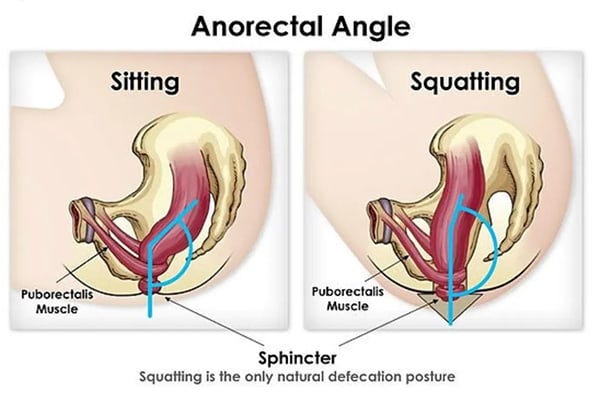
In turn, many find that if they squat while defecating, this significantly eases bowel movements (e.g., I periodically hear this story from patients who went to Asia and had to use squat toilets there). Sadly, however, like many other harmful modern cultural practices (e.g., there are a variety of issues with wearing bras such as it causing breast cancer), the importance of the position we defecate in is rarely recognized.
Conclusion
One of the things I find the most unfortunate about the constipation subject is that due to it being “inappropriate” to discuss, many patients simply don’t bring it up. Because of this, despite being a widespread problem in our society, little is still known about constipation and many unwise approaches are used to manage it.
I hence believe the subject deserves much more attention than it gets, and again and again I’ve seen just how significantly a person’s quality of life can improve once their bowels start functioning again. In many cases, the fix isn’t complicated — but finding what actually works requires stepping outside the standard model and taking the time to look at the full picture.
The good news is that once you start connecting these dots and supporting your body's natural processes — most people can get their digestive system back on track without becoming dependent on pills. It just takes looking at the whole picture instead of treating constipation like it's some mysterious, unsolvable problem when the answers are often hiding in plain sight or simply doing what our ancestors used to.
Author’s Note: This is an abridged version of a longer article about the causes and treatments of constipation which goes into greater detail on the natural therapies for constipation. That article and its additional references can be read here.
A Note from Dr. Mercola About the Author
A Midwestern Doctor (AMD) is a board-certified physician from the Midwest and a longtime reader of Mercola.com. I appreciate AMD's exceptional insight on a wide range of topics and am grateful to share it. I also respect AMD’s desire to remain anonymous since AMD is still on the front lines treating patients. To find more of AMD's work, be sure to check out The Forgotten Side of Medicine on Substack.
Disclaimer: The entire contents of this website are based upon the opinions of Dr. Mercola, unless otherwise noted. Individual articles are based upon the opinions of the respective author, who retains copyright as marked.
The information on this website is not intended to replace a one-on-one relationship with a qualified health care professional and is not intended as medical advice. It is intended as a sharing of knowledge and information from the research and experience of Dr. Mercola and his community. Dr. Mercola encourages you to make your own health care decisions based upon your research and in partnership with a qualified health care professional. The subscription fee being requested is for access to the articles and information posted on this site, and is not being paid for any individual medical advice.
If you are pregnant, nursing, taking medication, or have a medical condition, consult your health care professional before using products based on this content.
The large intestine transports waste along its path to the rectum through rhythmic muscular contractions of its walls (peristalsis). This activity is controlled by the nerves of the enteric nervous system (ENS). Slow transit constipation (STC), formerly known as intestinal neuronal dysplasia (IND), is characterized by reduced motility (spontaneous movement) within the large intestine, caused by abnormalities of the enteric nerves.
An excess of bacteria in the upper part of the small intestine can cause symptoms of bloating, pain, and diarrhea. Symptoms appear immediately after eating because gut bacteria begin consuming food in the small intestine before it can be absorbed. Small intestinal bacterial overgrowth is due to abnormal motility in this organ (SIBO).
Some people have difficulty relaxing the sphincter muscle when straining to have a bowel movement, or may even clench it more tightly. This produces symptoms of constipation. It's possible to experience constipation even when eating plenty of vegetables due to several factors. Although fiber is important for digestive health, consuming too much fiber, especially without adequate hydration, can worsen constipation. Additionally, other factors such as lack of exercise, dehydration, stress, or certain medical conditions can also contribute.
Too much fiber, especially if not accompanied by enough water, can cause stool to become compacted and move slowly through the intestine. Fiber requires water to soften stool and facilitate its passage through the intestine. If you don't drink enough water, fiber can worsen constipation.
There are soluble and insoluble fibers. Soluble fiber, such as that found in oats or legumes, can help soften stools, while insoluble fiber, such as that found in whole grains, can increase stool bulk.
If you suffer from occasional constipation, insoluble fiber is probably better for you, as it speeds up intestinal transit. On the contrary, for IBS patients, soluble fiber helps regulate bowel movements and improves the health of intestinal bacteria. Insoluble fiber adds bulk and volume to stool, stimulates bowel movements, and facilitates its passage through the digestive tract. Foods with insoluble fiber are, therefore, foods that combat constipation.
Physical activity helps stimulate bowel movements and can prevent constipation. Lack of activity increases the time stool spends in the intestine, and the colon absorbs more water, making stool more difficult to pass.
Stress can affect the digestive system and cause constipation.
Constipation is one of the many symptoms typically associated with irritable bowel syndrome (IBS) and other functional bowel disorders.
Some medical conditions, such as thyroid problems, can contribute to constipation.
TRY CHEWING YOUR FOOD THOROUGHLY AND MAKING FRUIT AND VEGETABLE SMOOTHIES THAT INCLUDE KIWI, FRESH PRUNES, AND ORANGES. Consuming too much fiber can cause gas, pain, and bloating. For this reason, it's important to consume it in moderation and gradually increase your portions over time, if necessary.
Foods with soluble and insoluble fiber:
https://www.northottawawellnessfoundation.org/wp-content/uploads/2017/11/NOWF-Fiber-Content-of-Foods.pdf .--
https://www.mayoclinic.org/es/healthy-lifestyle/nutrition-and-healthy-eating/in-depth/fiber/art-20043983 .--