
Exercise Trains Your Immune Cells to Stay Strong as You Age
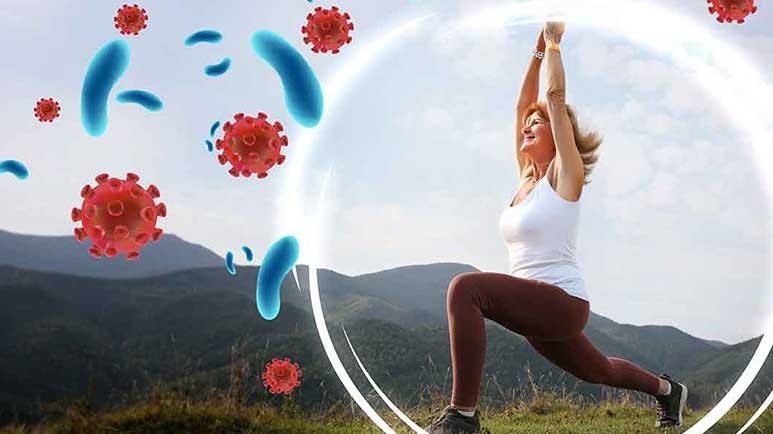
Your immune system isn't fixed - it learns from your lifestyle. New research shows that the right kind of exercise literally trains your immune cells to stay strong, steady, and youthful as you age.

STORY AT-A-GLANCE
Exercise trains your immune system to respond faster and recover more efficiently, helping you stay energized and more resistant to illness
Years of consistent moderate training reshape how your immune cells produce and manage energy, keeping them youthful and resilient as you age
Active adults maintain steadier inflammation and bounce back quicker from stress, reducing fatigue, soreness, and lingering symptoms after illness
Daily walking with short, high-quality strength sessions builds immune stability without overwhelming your system or spiking stress hormones
Training your immune cells through repetition — not intensity — gives you lasting protection, better recovery, and steadier energy throughout your life

Exercise affects your immune system far more deeply than most people realize. Your daily energy, recovery, and resistance to illness are tied to the way your immune cells age. Your immune defenses don’t collapse overnight — they gradually lose speed and coordination. You feel that shift as more frequent colds, sluggish mornings, stubborn inflammation, or the sense that stress hits harder than it used to.
These early signals often appear long before someone thinks about “immune aging.” Most people chalk them up to getting older, but the truth is that your immune cells depend heavily on how well your body produces and manages energy. When those energy systems slow down, your defenses follow. That’s why so many adults report feeling worn down even when their lab work still looks normal.
You might be surprised to learn that researchers studying aging are now documenting how people who keep regular movement in their lives often maintain steadier inflammation, faster recovery, and a more balanced response to everyday stress. These aren’t traits reserved for elite athletes. They show up in ordinary adults who build years of consistent, moderate training into their routine — the kind of training that reshapes how your cells react under pressure.
Trained Immune Cells Behave Like They Belong to a Younger Body
A study published in Scientific Reports examined how years of endurance training influence natural killer cells in older adults.1 Natural killer cells are immune cells that act like your body’s rapid-response defense team, targeting infected or abnormal cells before they spread. The researchers’ goal was to determine whether long-term training gives your immune system a measurable advantage as you age.
The study contrasted lifelong endurance-trained individuals with sedentary adults of the same age — The trained group showed stronger, more resilient immune activity, meaning their bodies handled stress, inflammation, and metabolic strain more effectively. These are the same pathways that influence how often you get sick, how quickly you recover, and how energized you feel day to day.
Trained adults’ immune cells were faster, stronger, and more efficient in almost every measurable way — The researchers found that trained natural killer cells responded more vigorously when exposed to threats, outperforming the untrained group in activation speed, strength, and durability.
The trained group’s cells were more capable of clearing abnormal cells, which translates into better defense against infections and inflammatory stress. This heightened performance hints at why active adults often feel more resilient and experience fewer lingering symptoms after illness.
The cells from trained adults showed higher energy output, giving them more power to respond under pressure — The endurance-trained group had natural killer cells with “higher oxygen consumption” and more energetic reserve capacity, meaning their cells produced more usable energy when challenged.
Higher oxygen consumption is simply a sign that mitochondria — the energy factories inside your cells — are performing at a stronger, more youthful level. When your immune cells have more energy, they respond quicker and recover faster, which benefits your overall health.
Trained immune cells resisted stress tests that normally weaken older adults’ defenses — Researchers exposed natural killer cells to metabolic stressors like propranolol and rapamycin, two compounds known to reduce cellular activation. Despite the pressure, trained adults’ cells kept functioning, showing much greater resilience than the untrained group.
This resistance demonstrates a major “what’s in it for you”: your immune system becomes harder to knock offline, even during illness, aging, poor sleep, or other stressors. The biggest improvements were seen in how efficiently these immune cells managed fuel. The trained group relied more on aerobic metabolism, meaning their cells used oxygen more effectively to produce steady, sustainable energy.
Training improves your immune system by enhancing mitochondrial performance — The researchers found that trained natural killer cells had stronger mitochondrial activity, including greater maximal respiration and enhanced spare respiratory capacity. In simple terms, the mitochondria inside these cells worked better, helping the immune system stay alert without burning out.
Trained natural killer cells also expressed higher levels of activation markers associated with a well-regulated, mature immune profile. This balance matters because it strengthens your ability to fight threats without triggering unnecessary inflammation that drains your energy or slows your recovery.
Decades of Training Create a Calmer, More Disciplined Immune Response
A related study published in Frontiers in Immunology examined how adults with decades of endurance training respond to inflammatory challenges compared to younger, highly active athletes.2 The goal was to determine whether long-term conditioning changes how the immune system reacts when it’s intentionally provoked in a lab setting. This paper reveals a different dimension of exercise-driven immune adaptation — one centered not on power or speed, but on control.
Younger trained athletes and master athletes who had been training for decades have different immune responses — Young athletes produced strong, rapid inflammatory responses, while the master athletes delivered steadier, more regulated reactions.
The “overreaction” phase seen in younger athletes resembles the inflammatory spikes that make you feel sore, drained, or fatigued after stress — while the long-trained pattern resembles a more energy-efficient, balanced response.
Longtime training reduces unnecessary inflammatory spikes — The master athletes showed lower concentrations of inflammatory cytokines when exposed to immune triggers. Cytokines are chemical messengers used to launch inflammation.
Lower spikes mean your body avoids flooding the system with stress signals that burn energy and slow recovery. Instead of the boom-and-bust pattern seen in the younger athletes, the master athletes’ responses stayed stable.
Master athletes recovered faster after immune activation — After a physical exercise challenge, the younger athletes displayed larger jumps in inflammatory markers, while the master athletes returned to baseline more smoothly. Faster return to baseline means your body spends less time in a stressed state and moves back into repair mode sooner.
A specific mechanism was tied to improved immune discipline — The study suggested that long-term endurance training strengthens the system responsible for regulating inflammatory signaling pathways. These pathways act like traffic controllers that direct when inflammation begins, how strong it becomes, and how quickly it winds down. Better regulation supports clearer thinking, steadier energy, and faster recovery after stress.
Immune resilience comes from consistency, not intensity — The researchers emphasized that the master athletes’ controlled responses resulted from years of accumulated training exposure, not from extreme daily workouts. This reinforces your ability to build a more stable immune system through manageable, sustainable movement rather than high-intensity sessions that are difficult to maintain and backfire when done in excess.
Simple Habits That Strengthen Your Immune Training
Your immune system responds to the way you live every single day, and your body becomes far more resilient when your cells are trained through consistent, controlled movement. That means your real leverage point isn’t a supplement or a shortcut — it’s rhythm, repetition, and small choices that retrain how your cells behave under stress. If you’ve been inactive, recovering from a setback, or feeling like your body overreacts to stress, these steps give you a way to rebuild stability from the inside out.
Build a daily movement streak that conditions your immune rhythm — Your cells learn through repetition, so you’ll strengthen your immune balance by doing something active every day. This doesn’t need to be a long workout. A 10-minute brisk walk, a short bike ride, or a rowing session counts. If you struggle with consistency, set a streak goal and reward yourself for hitting it. The point is to train your immune system the same way you’d train a muscle — frequently and predictably.
Use moderate-intensity walking as your cardio base and pair it with short strength sessions — One of the strongest ways to stabilize your energy and immune response is to combine steady walking with brief, high-quality strength training. Overdoing cardio or spending hours lifting often backfires — spiking stress hormones, exhausting your mitochondria, and worsening insulin resistance.
Work up to one hour of walking daily, broken into chunks if needed. Keep your strength training sessions short — about 20 minutes twice a week — and focus on quality, not quantity. This gives you the endurance benefits seen in lifelong trainees without overwhelming your system.
Add one weekly “easy but lasting” session to train resilience without triggering stress — Your immune system adapts to duration, not just intensity, so a longer, gentle session helps your cells stay efficient under pressure. Even 25 to 40 minutes of slow movement teaches your mitochondria to keep producing energy smoothly.
If you tend to push too hard, think of this as your “patience workout,” not your performance workout. You should feel better after it — not drained.
Incorporate KAATSU to boost strength and endurance with minimal strain — If heavy lifting feels intimidating or you’re trying to avoid joint stress, you can use KAATSU, also known as blood flow restriction training. It involves soft cuffs or bands that gently restrict blood flow during exercise.
This mild restriction encourages your muscles to work harder at a cellular level, helping you gain strength and endurance using only light weights or bodyweight movements. You can even use it while walking, stretching, or doing mobility drills to improve circulation and speed recovery. If you want to build strength safely and sustain progress long term, this method helps you do more with less effort.
Recover with intention and track how your body responds — The master athletes recovered quickly because their systems didn’t stay inflamed for long periods. You support the same pattern by ending each workout with a short cool-down: slow breathing, relaxed walking, or gentle stretching. Treat recovery as part of training, not an afterthought. To reinforce your progress, keep a simple log of energy levels, sleep, and how quickly soreness fades.
This boosts self-efficacy and gives you visible proof that your consistency is paying off — which builds motivation and keeps your momentum going. By treating your daily movement as training for your immune system — not just exercise — you give yourself the same long-term advantages seen in lifelong trainees: controlled inflammation, faster recovery, and steadier energy.
FAQs About Exercise and Your Immune System
Q: How does exercise “train” my immune system?
A: Regular movement teaches your immune cells to respond faster and more efficiently to stress and infections. Over time, this helps your body control inflammation better, recover quicker, and maintain more stable energy.
Q: What type of exercise gives the strongest immune benefits?
A: Consistent, moderate-intensity movement — like daily walking — combined with brief strength sessions twice a week provides a large payoff without the risk of overtraining. You don’t need extreme workouts to get results.
Q: Why is endurance-style activity so important for immune aging?
A: Endurance training improves how your cells create and manage energy. This supports natural killer cells — your frontline defenders — so they stay strong and youthful even as you age.
Q: Do I need to work out like a competitive athlete to see these benefits?
A: No. The immune resilience seen in lifelong endurance athletes comes from consistency, not intensity. Even small daily habits compound into major improvements over the years.
Q: How can I start strengthening my immune system today?
A: Begin with a daily movement streak, add short strength workouts, include one longer easy session each week, explore KAATSU if you want low-stress strength gains, and be intentional about recovery. Tracking how you feel helps reinforce progress and keeps motivation high.
Disclaimer: The entire contents of this website are based upon the opinions of Dr. Mercola, unless otherwise noted. Individual articles are based upon the opinions of the respective author, who retains copyright as marked.
The information on this website is not intended to replace a one-on-one relationship with a qualified health care professional and is not intended as medical advice. It is intended as a sharing of knowledge and information from the research and experience of Dr. Mercola and his community. Dr. Mercola encourages you to make your own health care decisions based upon your research and in partnership with a qualified health care professional. The subscription fee being requested is for access to the articles and information posted on this site, and is not being paid for any individual medical advice.
If you are pregnant, nursing, taking medication, or have a medical condition, consult your health care professional before using products based on this content.
Regular exercise doesn't just build muscle; it creates a "trained" immune system that behaves years younger. By enhancing the mitochondrial performance of natural killer (NK) cells, consistent movement shifts the body from erratic inflammatory spikes to a disciplined, energy-efficient response that ensures faster recovery and lasting resilience.