
Microplastics Could Be Weakening Your Bones, New Study Finds
Researchers found this toxin embedded in neural tissue, blood vessel walls, and immune cells throughout the brain, with the highest concentrations appearing in people who died with dementia.

STORY AT-A-GLANCE
A recent Osteoporosis International review summarized multiple studies showing that microplastics have been detected in human bone tissue, where they disrupt bone cell activity, trigger inflammation, and weaken structural integrity
Laboratory and animal studies show microplastics accelerate osteoclast activity and alter bone microarchitecture, linking environmental plastic exposure to rising rates of bone fragility and dysplasia
Microplastics are not limited to bone; previous research has also detected them in the bloodstream, brain, placenta, heart, lungs, liver, kidneys, and reproductive tissues
Ultrafine combustion particles (UFPs), which are smaller than microplastics, pose an even greater threat due to the vastly higher levels of exposure you face each day
Lower your daily microplastic exposure by switching to natural fabrics, filtering your air and water, avoiding plastic containers, and replacing plastic kitchen tools with safer materials

Every year, more than 400 million tons of plastic are produced,1 and much of it breaks down into particles smaller than 5 millimeters, known as microplastics. They enter your body through the air you breathe, the water you drink, the food you eat, and the countless materials that you use daily. Once they cross into the bloodstream, they reach tissues that were never meant to store synthetic debris and silently accumulate inside you.
A narrative review published in the Osteoporosis International2 recently examined what happens when these microscopic plastic particles come into contact with the body’s strongest and most enduring structure — the bones. Their findings carry significant implications as bone-related diseases continue to rise worldwide, with the global incidence of osteoporosis-related fractures expected to rise by 32% by 2050.3
How Microplastics Are Damaging Your Bones from the Inside Out
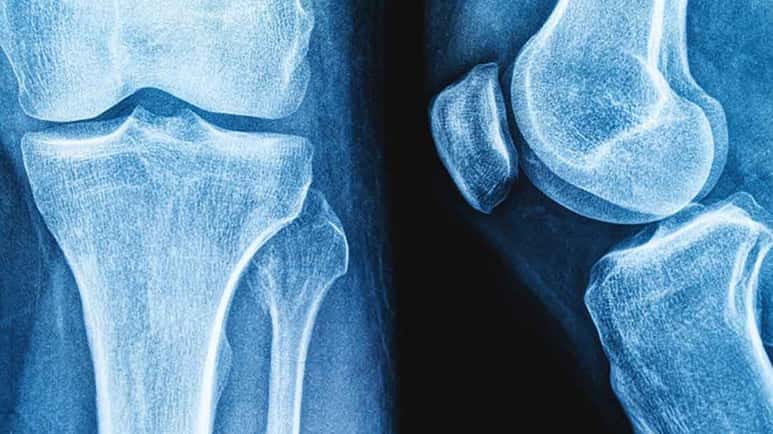
In the featured review, researchers from the State University of Campinas in Brazil analyzed 62 scientific papers to assess what is currently known about microplastics and skeletal health, including their links to bone diseases like osteoporosis. The review found that microplastics have been detected in human bone tissue and that experimental evidence points to multiple harmful effects on bone-forming and bone-resorbing cells.4
Microplastics disrupt bone cell function — In laboratory studies, exposure to microplastics reduced cell viability, accelerated cell aging, and interfered with how stem cells in the bone marrow differentiate into specialized cells. These changes included promoting the formation of osteoclasts, the multinucleated cells that break down bone tissue through a process called bone resorption.
Inflammation and oxidative stress drive damage — Microplastic exposure triggered inflammatory signaling and increased production of reactive oxygen species (ROS), which damage proteins, lipids, and DNA. This oxidative and inflammatory stress disturbed the normal equilibrium between bone formation and bone loss, undermining bone density and structural integrity.
Animal studies confirm skeletal disruption — In animal experiments, microplastics were detected within bone tissue and bone marrow following exposure. The animals developed altered bone microstructures, including reduced growth and impaired trabecular formation, the lattice-like framework that provides strength and flexibility.
Some studies also reported disrupted gut microbiota and lowered white blood cell counts, suggesting a link between microplastic exposure, immune imbalance, and bone marrow dysfunction.
Accelerated osteoclast aging leads to deformities — One of the researchers, Rodrigo Bueno de Oliveira, explained that in these studies, excessive osteoclast activity and premature aging of these cells led to bone deformities, dysplasia, and in some cases, halted skeletal growth.
Although the precise mechanical effects remain unclear, the evidence suggests that microplastics circulating in blood and bone marrow interfere with bone metabolism and regeneration.
Researchers are now investigating microplastics’ role in the growing burden of bone disease — Using animal models, the team has set out to examine how microplastic exposure affects bone strength and integrity, focusing on the femur as a key site for assessing mechanical resilience. According to Oliveira:
“Improving quality of life and reducing the risk of bone complications, such as fractures, is a priority in healthcare. We already know that practices such as physical exercise, a balanced diet, and pharmacological treatments contribute significantly to this.
However, although osteometabolic diseases are relatively well understood, there’s a gap in our knowledge regarding the influence of microplastics on the development of these diseases.
Therefore, one of our goals is to generate evidence suggesting that microplastics could be a potential controllable environmental cause to explain, for example, the increase in the projected number of bone fractures.”5
The skeletal system is enclosed and not in direct contact with environmental exposures,6 making the discovery of microplastics in bone tissue especially alarming. It raises pressing questions about how deeply these particles penetrate the body and the extent of the damage they leave behind.
Where Else Have Microplastics Been Found in the Human Body?
The skeletal system is only one of many sites now known to harbor plastic particles, as studies over the past few years have mapped their presence throughout the body, including:
Bloodstream — A 2022 study published in Environment International provided the first quantitative evidence that plastic particles circulate in the human bloodstream.7 Further analysis confirmed the presence of polyethylene and polypropylene — plastics commonly used in packaging and textiles — in human blood.8
These findings show that everyday environmental exposure is enough for plastic fragments to cross tissue barriers and reach systemic circulation. And once microplastics enter your body, they circulate freely and reach every organ and tissue.
Brain — Microplastics have been identified in human brain tissue, confirming that these particles are capable of breaching the blood-brain barrier, which normally restricts the entry of foreign substances.9 A 2024 analysis of postmortem samples reported that the brain contained a higher concentration of polyethylene than other organs.10
The particles were nanosized, shard-like fragments embedded in neural tissue, blood vessel walls, and immune cells. The highest levels were observed in individuals diagnosed with dementia, suggesting a possible association between plastic accumulation and neurodegenerative disease.11
Placenta and breast milk — Microplastics have been detected in human placental tissue, marking one of the first confirmations of prenatal exposure. Fragments were found on both the maternal and fetal sides of the placenta, as well as in the amniotic membranes, showing that these particles can pass from a mother’s bloodstream into the fetal environment.12
They’ve also been identified in breast milk, indicating continued exposure after birth. The polymers detected are the same types commonly used in food packaging and household products, linking maternal diet and environmental contact to contamination of early life nourishment.13
These exposures occur during important stages of development, when organ systems, immune defenses, and metabolic control are still forming. At this stage, even small disruptions can affect growth, development, and long-term health.14
Heart and arteries — In 2023, researchers in China examined samples collected during open-heart surgery and confirmed the presence of multiple types of microplastics within cardiac tissue and the pericardium (the membrane surrounding the heart). The most frequently detected polymers were polypropylene (PP), polyethylene terephthalate (PET), and polyvinyl chloride (PVC).15
Another study published in the New England Journal of Medicine found microplastics and nanoplastics embedded in atheromas, the fatty plaques that develop inside arteries and contribute to cardiovascular disease. Their presence was linked to greater inflammation in arterial walls and a higher risk of major cardiovascular events, including stroke, heart attack, and death.16
Lungs, kidneys, and liver — Inhaled microplastics have been found in human lung tissue, embedded in the alveoli where gas exchange takes place. The thin membranes and constant airflow make the lungs especially vulnerable to particle buildup. Once lodged, these fragments can trigger inflammation and oxidative stress, damaging airway lining cells and impairing function over time.17
Microplastics also infiltrate the kidneys and liver as they’re filtered by the body’s detoxification and waste-removal systems. In the kidneys, they may interfere with filtration processes and burden renal tissue with oxidative stress. In the liver, where toxins are metabolized, their presence could disrupt enzyme activity, lipid metabolism, and bile secretion.18
Testicles and sperm — Microplastics have been found in human testicular tissue and sperm, confirming their ability to cross the blood-testis barrier, a highly selective barrier meant to protect developing sperm from harmful substances.
Once inside, they may disrupt the function of Sertoli and Leydig cells, which are essential for sperm maturation and testosterone synthesis. Research suggests that continued exposure could lower sperm count, alter sperm shape and mobility, and interfere with hormonal balance, raising concerns about long-term effects on male fertility.19
Ultrafine Combustion Particles (UFPs) Pose a Greater Threat
While microplastics have rightfully captured attention, UFPs represent an even larger and more immediate hazard. These particles measure under 100 nanometers in diameter and are generated through everyday combustion processes such as diesel exhaust, tire wear, industrial emissions, and indoor burning.20
Because of their minute size, they dominate the air you breathe — UFPs account for over 90% of airborne particles even though they contribute little to total mass.21 Urban air typically contains 10,000 to 14,000 UFPs per cubic centimeter, with concentrations near highways spiking to 160,000 particles in the same volume of air. With every breath, you inhale thousands to hundreds of thousands of these particles.
Exposure far exceeds that of microplastics — Total yearly exposure to microplastics and nanoplastics through air and food ranges from 39,000 to 121,000 particles.22 23 In contrast, UFP exposure occurs continuously and at levels millions to billions of times higher. Over a single year, this amounts to trillions of particle contacts with the lungs and bloodstream.
Microplastics and nanoplastics share mechanisms but differ in scale — Nanoplastics overlap in size with UFPs and can cross biological barriers such as the placenta and blood-brain barrier. However, their exposure levels are far lower, and their accumulation is slower. UFPs cause far greater total body burden because they are inhaled constantly and in enormous numbers.
UFPs penetrate deeper and persist longer — Because they are smaller than 100 nanometers, UFPs reach deep into the alveoli of the lungs, cross into circulation, and spread throughout the body. Once inside, they are not easily removed and linger longer than larger fine particles. Their vast surface area relative to mass allows them to carry and release toxic chemicals and metals that generate reactive oxygen species.
Health evidence is strongest for UFPs — The oxidative stress triggered by UFPs sets off widespread inflammation, weakens blood vessel linings, and alters coagulation, increasing the risk of hypertension and cardiovascular disease.24 The relationship between UFP exposure and vascular damage is well documented in air pollution research, whereas evidence for micro- and nanoplastics is still emerging.
Overlap amplifies toxicity — Nanoplastics that fall within the ultrafine range interact with combustion particles in air or inside the body. This overlap could intensify toxicity, since both serve as carriers for environmental chemicals and enhance oxidative stress responses.
Regulation lags far behind risk — Despite their abundance and clear health effects, UFPs remain largely unregulated. Air quality standards typically address PM2.5 and PM10, which exclude ultrafine particles entirely. This gap leaves the most numerous and reactive pollutants unmonitored.
The sheer scale of UFP exposure shows how deeply pollution has entered human biology. Once these particles reach your tissues, removal becomes difficult, prompting scientists to look for ways to help the body clear what it can. Much of this research focuses on microplastics, but the goal is the same — to restore balance in systems overwhelmed by synthetic debris.
Emerging Strategies to Naturally Eliminate Microplastics
Researchers are now investigating ways to help the human body capture, filter, and remove microplastics before they circulate through other systems. These emerging methods take a multi-angle approach to reduce your internal plastic burden and support overall health. I’ve recently written a paper discussing these methods in detail, and while it is still under peer review, I’ve provided the key findings below.
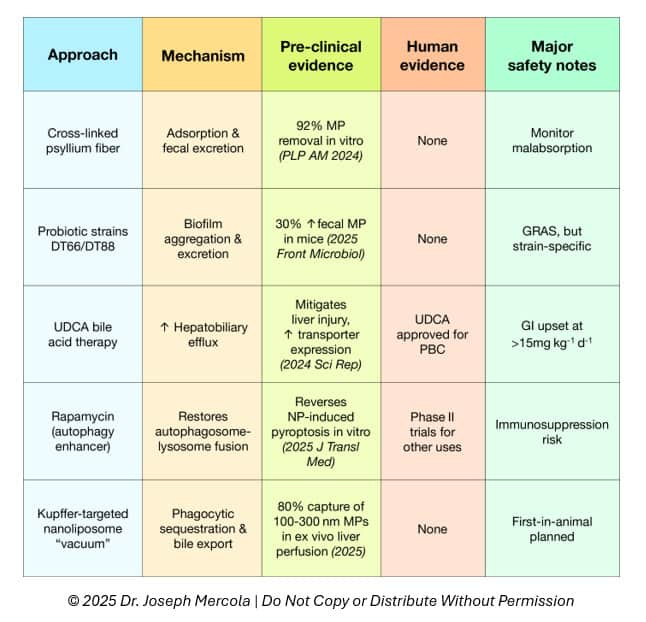
Cross-linked psyllium could aid in the removal of microplastics — The gut is one of the body’s main routes for eliminating ingested particles. In 2024, researchers found that acrylamide cross-linked psyllium (PLP-AM) was able to extract more than 92% of common plastics, including polystyrene, PVC, and PET, from water.
Due to its strong swelling capacity and adhesive, gel-like texture, cross-linked psyllium could be adapted to work in the gut, where it may capture plastic particles before they are absorbed into the body. Although the research was performed in the context of water treatment, the outcomes suggest encouraging possibilities for human health.25
Chitosan, a natural fiber sourced from shellfish, may also help your body clear microplastics — In a recent animal study published in Scientific Reports, rats fed a chitosan-enriched diet excreted about 115% of the polyethylene microplastics they were given, compared to 84% in the control group.
These findings indicate that chitosan not only binds and helps remove newly ingested plastic particles but also assists in eliminating those already absorbed. However, while chitosan is generally considered safe and is commonly used in supplements, it’s not suitable for individuals with shellfish allergies.26
Both psyllium and chitosan remove microplastics through physical adsorption, where hydrophobic (water-repelling) and electrostatic forces cause particles to adhere to the fiber, preventing absorption. However, these binders can also attach to nutrients if taken improperly, so timing matters. They are best used strategically, such as alongside processed or packaged foods that are more likely to contain plastic residues.
Certain probiotic strains help in clearing microplastics from the gut — In a 2025 animal study, two strains, Lacticaseibacillus paracasei DT66 and Lactiplantibacillus plantarum DT88, were shown to bind to and remove small polystyrene particles in laboratory experiments.27
These probiotics create biofilms, which are protective layers that trap plastic fragments and help the body expel them more efficiently. When paired with dietary fibers such as psyllium and chitosan, they may offer a more effective, natural means of sweeping microplastics out of the digestive tract before absorption occurs.
The liver also plays a vital role in removing microplastics from circulation — Specialized immune cells known as Kupffer cells capture these foreign particles and direct them into bile, allowing elimination through the intestines. However, while this process is effective for smaller particles, larger ones linger and accumulate, especially when liver function is impaired.
To enhance this natural detoxification pathway, researchers are investigating compounds such as ursodeoxycholic acid (UDCA) and its derivative tauroursodeoxycholic acid (TUDCA), which increase bile flow and improve the movement of trapped particles out of the liver.
Researchers are also exploring ways to enhance autophagy to eliminate microplastics — Autophagy is your body’s built-in cellular recycling system. Two compounds, rapamycin and spermidine, have received particular attention for their ability to stimulate this pathway.
Rapamycin works by inhibiting mTOR, a nutrient-sensing mechanism that normally suppresses autophagy. When this pathway is blocked, cells increase their cleanup activity, forming membranes that capture and isolate plastic particles for breakdown or removal. Spermidine, a naturally occurring polyamine found in various foods, supports cellular resilience and promotes the clearance of toxic substances.
In laboratory and animal studies, the combination of rapamycin and spermidine helped restore mitochondrial function and reduce oxidative stress triggered by microplastic exposure.
The table below outlines these novel strategies for clearing microplastics, summarizing their mechanisms, available evidence, and safety considerations. Together, they highlight that while multiple approaches may be needed, clearing plastics from your body naturally is possible. Of course, reducing your overall exposure remains the most effective starting point.
Practical Steps to Lower Your Daily Microplastic Exposure
While microplastics have become impossible to avoid entirely, there are simple steps you can take to reduce how much enter your body each day. These changes may seem small on their own, yet together they help lower the cumulative burden of plastic particles that enter through your air, food, and water, protecting not only your skeletal health but also your long-term well-being.
Ditch synthetic textiles and choose natural fibers whenever possible — Synthetic fabrics like polyester, nylon, and acrylic shed invisible fibers every time they’re worn, washed, or dried indoors. Opt for natural materials such as cotton, wool, linen, or hemp for clothing, bedding, and towels.
For the synthetic pieces you already own, wash them less often, line dry them instead of using a dryer, and use a microfiber-catching laundry bag to trap loose particles before they spread through your home.
Upgrade your air and water filtration systems — Use a high-efficiency particulate air (HEPA) purifier to capture fine plastic dust that collects indoors, particularly if you live near heavy traffic or in a space with limited airflow. Choose a unit designed to trap particles 2.5 micrometers (PM2.5) or smaller for the best protection.
For drinking and cooking, install a water filter that removes particles down to the micron level. In areas with hard tap water, consider boiling it before using it for cooking or drinking, as hard water traps more microplastics. Research shows boiling hard tap water for five minutes removes up to 90% of the microplastics in the water.28 If you need to buy bottled water, opt for glass bottles instead of plastic.
Stop heating and storing food in plastic containers — Heat accelerates the breakdown of plastic into micro- and nanoplastic fragments, so avoid microwaving leftovers in plastic tubs, drinking hot beverages from plastic-lined cups, or pouring boiling water into disposable bottles. Switch to glass or stainless steel for storage, and make it a habit to transfer food into nonplastic dishes before reheating.
Vacuum and dust in a way that captures particles rather than spreading them — Household dust is one of the largest indoor sources of microplastic exposure. Standard vacuums often blow fine debris back into the air, so choose a sealed model equipped with a HEPA filter.
Vacuum carpets, rugs, and pet areas regularly, since synthetic textiles shed fibers with movement. When cleaning surfaces, skip the dry cloth. A slightly damp microfiber cloth holds on to dust rather than scattering it, keeping airborne microplastics out of your breathing zone.
Replace plastic tools and surfaces in your kitchen — Every slice on a plastic cutting board releases small fragments that mix with food. Replacing them with wooden or glass cutting boards eliminates this constant source of exposure. The same goes for cooking utensils — stainless steel and bamboo alternatives are far safer than plastic spoons or spatulas that degrade with heat.
Avoid personal care products containing plastic additives — Many scrubs, toothpastes, and cosmetics still contain polyethylene or polypropylene microbeads or thickeners that release plastic onto your skin and into the air during use.
Check ingredient labels and choose products made with natural exfoliants such as salt, sugar, or ground nut shells. Packaging also matters; select brands that use glass or metal containers to limit secondary contamination.
For more tips to lower your microplastic exposure and minimize its impact on your health, read “Microplastics Continue to Threaten Public Health.”
Frequently Asked Questions (FAQs) About Microplastics
Q: How do microplastics get into my bones?
A: You’re exposed to microplastics through the air you breathe, the food you eat, and the water you drink. They’re released from clothing fibers, packaging, cookware, and countless everyday materials. Once they enter your system, they circulate in your bloodstream and settle in tissues and organs, including your bones.
Q: How do microplastics affect my bone health?
A: Microplastics can disturb the balance between cells that build bones (osteoblasts) and those that break them down (osteoclasts). They increase oxidative stress and inflammation, leading to reduced bone density and weaker microarchitecture. In animal studies, exposure even caused deformities and impaired bone growth.
Q: Where else in my body could microplastics be found?
A: Researchers have detected them in the bloodstream, brain, lungs, liver, kidneys, heart, arteries, placenta, breast milk, and reproductive tissues. This means plastic particles can reach nearly every organ system, often crossing barriers that normally protect vital tissues.
Q: Are ultrafine combustion particles (UFPs) worse than microplastics?
A: Yes. UFPs, produced by sources like diesel exhaust and industrial emissions, are even smaller and more numerous. You inhale thousands to hundreds of thousands of them with every breath. They penetrate deep into your lungs, enter your bloodstream, and trigger inflammation and vascular injury linked to heart and lung disease.
Q: How do I lower my daily microplastic exposure?
A: Simple lifestyle changes make a big difference. Start by choosing natural fabrics like cotton or linen instead of synthetics, and keep your indoor air clean with a HEPA purifier.
Filter your drinking water to reduce plastic particles, and avoid microwaving food in plastic containers or drinking from plastic-lined cups. In the kitchen, use glass, wood, or stainless steel utensils, and when it comes to personal care, choose products made without microbeads or plastic-based ingredients.
Disclaimer: The entire contents of this website are based upon the opinions of Dr. Mercola, unless otherwise noted. Individual articles are based upon the opinions of the respective author, who retains copyright as marked.
The information on this website is not intended to replace a one-on-one relationship with a qualified health care professional and is not intended as medical advice. It is intended as a sharing of knowledge and information from the research and experience of Dr. Mercola and his community. Dr. Mercola encourages you to make your own health care decisions based upon your research and in partnership with a qualified health care professional. The subscription fee being requested is for access to the articles and information posted on this site, and is not being paid for any individual medical advice.
If you are pregnant, nursing, taking medication, or have a medical condition, consult your health care professional before using products based on this content.
The consumption of packaged foods has increased substantially in recent decades. The global packaged food market was valued at $1.9 trillion in 2020 and is expected to reach $3.4 trillion by 2030. Life cycle assessment (LCA) is widely used to compare the relative impacts of different packaging materials for a food product. This article analyzes 28 studies that perform LCAs on food products. For most of the 13 reported environmental indicators, plastic packaging is responsible for less than 10% of the total life cycle pollutant emissions for 23 of the 30 foods studied. The relative emissions from packaging tend to be higher for liquids and food products packaged in small quantities, although the absolute values for energy use and greenhouse gas (GHG) emissions are small. To make the LCA results more accessible to non-scientific audiences, this study compares the results to a benchmark of emissions from vehicle travel. The environmental impact of packaging from annual per capita food consumption is less than the environmental impact of daily per capita vehicle travel for most of the food products analyzed, although annual beverage consumption can be responsible for the impact equivalent to 76 miles of driving. The driving factors affecting the design and production of materials and the design of fully bio-based packaging should be analyzed, considering the minimization and valorization of byproducts and waste, recyclability, biodegradability, and other potential end-of-life uses and their impact on the sustainability of the product/packaging system.
https://www.sciencedirect.com/science/article/abs/pii/S0921344922000040 (2022).----
https://www.mdpi.com/2304-8158/12/5/1057 (2023).----
https://www.sciencedirect.com/science/article/abs/pii/S0924224423000523 (2023)
https://www.mdpi.com/2073-4360/15/16/3431 (2023).-----